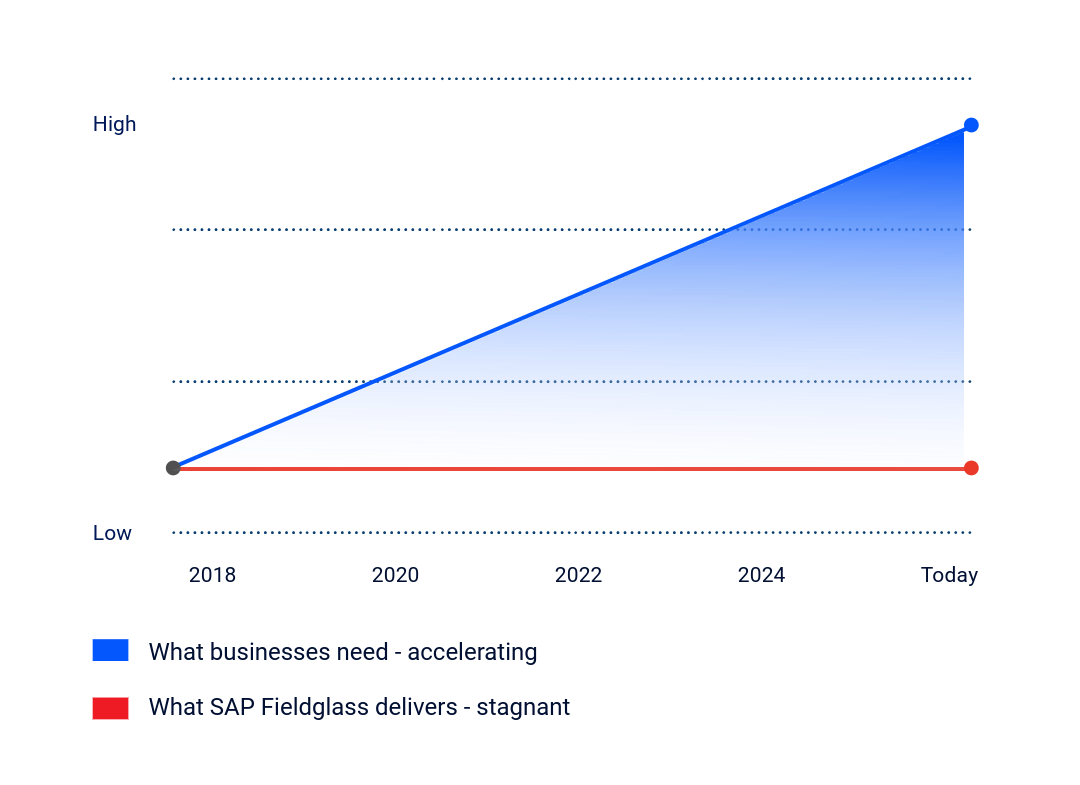
The SAP Fieldglass customer experience has become remarkably consistent. If your initial ROI has been replaced by growing frustration, you’re not alone.
You picked the right VMS for you at the time - but a lot's changed

External workforce management is no longer what it was five or even three years ago.
-
Compliance is more complex.
-
AI expectations are higher.
-
Leadership demands real-time visibility.
And many teams are realizing something uncomfortable: their VMS hasn't kept up.
A dedicated account resource used to be normal
What once felt responsive now feels slow and getting help takes longer than it should.
Fieldglass is a small part of a much larger SAP roadmap
Every update reinforces that VMS innovation isn’t the priority.
What started as integration has become lock-in
Integration convenience turned into ecosystem dependency.
You need to pay more in order to be prioritized
It’s starting to feel like they’re invested in a renewal, not your success.
The real risk is allowing inefficiencies to build quietly over time.
The good news is that switching doesn’t look the way it used to. A lot has changed since you were in the market for a VMS. Today’s migrations are structured, phased, and designed to avoid disruption.
Still, even if you’re ready to switch, you might not know how to:
- Position the VMS transition
- Quantify the impact of your VMS’ limitations
- Communicate value vs. cost
Who's your biggest roadblock?
Different people in your company care about different things when it comes to your contingent workforce program. Everyone needs to be on board with the move, down to the everyday users of your VMS.
Click on each stakeholder to learn how to position the need to switch from SAP Fieldglass to Beeline, focusing on what matters most to them.
Executives
Visibility isn’t enough
Your current VMS shows you what happened. It doesn’t help you act faster, manage risk proactively, or steer workforce strategy in real time.
If you can see the data but still can’t move quickly, it’s time to switch.
IT
Integration shouldn’t mean lock-in
Your current VMS may integrate, but brittle connections create security exposure, technical debt, and architectural dependency.
If your VMS limits your ecosystem flexibility, it’s not supporting your strategy.
Finance
Reporting isn’t the same as control
Your VMS can report spend, but it can’t explain leakage, defend rates, or support confident forecasting and ROI.
If you can’t trust your numbers without manual reconciliation, you’re operating at risk.
Procurement
Managing suppliers isn’t
optimizing them
Without real benchmarking and performance visibility, you can’t identify underperforming suppliers or negotiate effectively.
If you can’t see where value is leaking, you can’t protect margin.
Compliance
Reactive compliance is exposure
Audits flag problems after they happen. Modern risk demands real-time prevention of misclassification, fraud, and regional labor compliance issues.
If risk prevention isn’t built into execution, you’re already behind.
Hiring managers
If they avoid it, it’s broken

Complex workflows, too many clicks, and slow approvals drive managers to bypass the system.
When adoption drops, control drops with it.
The right message to the right person changes everything.
As workforce models evolve, you don’t need another workflow tool. You need a platform built for evolving workforce models.
Expertise matters more than ever before

What got you here won’t get you there. That goes for you, and that goes for VMS providers, too. Keeping up with the pace of business change and AI innovation takes 100% focus on extended workforce management.
Not as a bolt-on. Not as part of a broader ERP strategy. As the core of everything it does.
These organizations have already made the switch. Not to replace one system with another, but to partner with a technology company focused only on helping their programs run better, now and in the future.
Companies who chose a better way
Dozens of organizations have been exactly where you are. We've navigated every challenge, every concern, every "what if." Let’s talk about where you are and what it takes to get where you need to be.